Climate & Glaciers
Raising awareness about glaciers, snowfall patterns and environmental change in the Karakoram.
Learn more ⟶
Connecting local knowledge from Hispar Valley
with climate science, research and responsible mountain engagement.
Raising awareness about glaciers, snowfall patterns and environmental change in the Karakoram.
Learn more ⟶Bridging local knowledge with science. Opportunities for researchers, students and professionals.
Explore research ⟶Support responsible visits with local guidance, cultural understanding and respect for our heritage.
Plan your visit ⟶Our focus is the stories, traditions and wisdom of our homeland — including the Burushaski language,
oral histories and cultural heritage that connect our people with these mountains.
PART 1 OF 3 · PLACE, PEOPLE & LANDSCAPE
Hispar is K2Climate’s point of connection with the mountain world: a community in Nagar District, Gilgit-Baltistan, and the home of founder Abbas Ali. Visitors may first hear its name through glacier photographs or the Biafo–Hispar journey. Residents know it through family, language, work, shared occasions and the demands of everyday life. Both perspectives matter, but an account of the valley should begin with the people who live there.
A mountain settlement and the surrounding ice are related without being the same place. A village is not simply a base camp, and a glacier is not an empty space outside community interests. Research and visits can affect local time, relationships and expectations. Asking who should be involved, what a project will leave behind and how its findings will be explained is part of responsible engagement.
The official Nagar tourism guide introduces a landscape of valleys, glaciers and peaks including Rakaposhi and Diran, with places such as Hoper and Rush Lake. These help locate Hispar in a wider regional setting. They should not all be described as features of Hispar itself: a district contains different valleys, routes and communities. [1]
Names, routes and conditions need local context. A journey that looks short on a map may involve difficult ground or changing access. For a visitor, the useful question is not only “What can I see?” but “Whose advice do I need, what arrangements have been agreed, and how can my visit respect this place?”
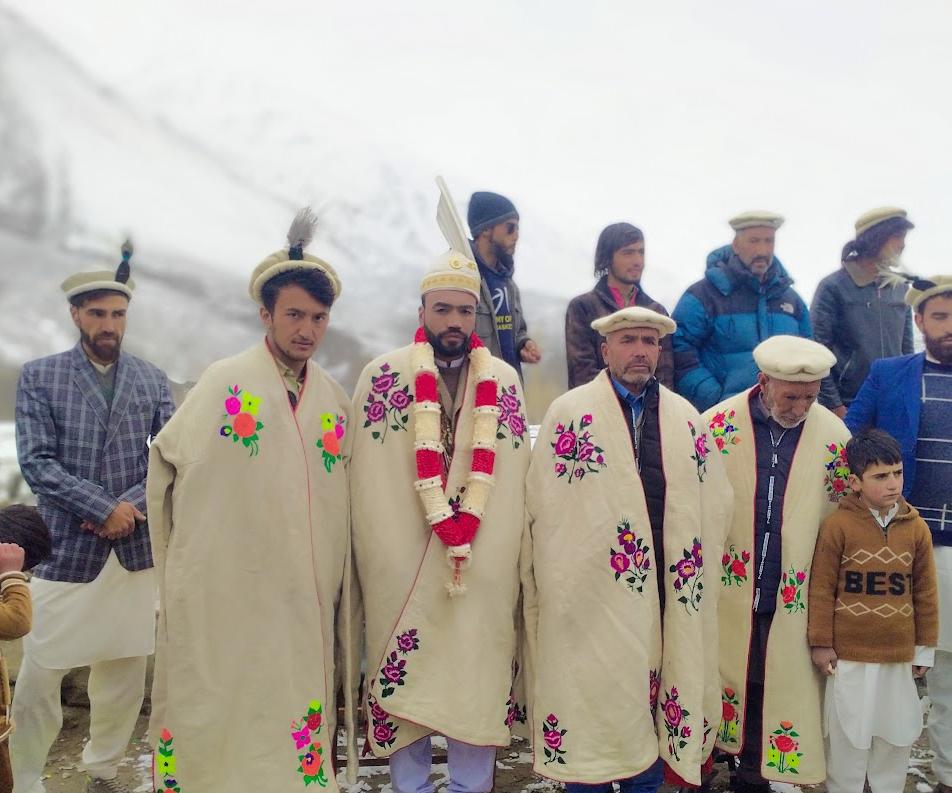
Language, stories and celebrations give a landscape meaning beyond its physical shape. Abbas’s photograph of a Burusho wedding in Hispar, shown in the About Us tab, offers a personal connection to this community. It does not represent every custom or grant permission to photograph another gathering. Cultural understanding comes through listening, consent and locally accurate descriptions.
PART 2 OF 3 · GLACIERS, SNOW & WATER
The Government of Gilgit-Baltistan describes Hispar Glacier as approximately 49 kilometres long and connects it with the Biafo–Hispar and Snow Lake journey. A published length is useful background, rather than a fixed measurement for all time: glacier boundaries and measurement methods can differ. [2]
Glaciers form where snow survives through successive years and gradually becomes denser ice. Gravity moves that ice through a valley. Snow accumulation adds material; melting and other processes remove it. To understand whether a glacier is gaining or losing ice overall, researchers need more than a photograph of its front. They consider changes across the glacier and over a defined period.
A surge is an unusually rapid phase of glacier movement. Retreat describes a change in the position of a glacier’s end. Mass balance concerns the difference between ice gained and lost. A glacier can show complicated combinations of movement and thickness change. Hispar’s surges have been investigated using satellite radar, so we can build on existing research rather than imply that the glacier has never been studied. [3]
Seasonal snow also matters. It can store water through a cold period and release it as temperatures rise. A change in when snow arrives, persists or melts may matter to people even if the total annual amount is uncertain. An elder’s description of a late snowfall can identify a valuable question; repeated observations and suitable records help assess whether it reflects a longer pattern.
Suppose a resident remembers water arriving earlier in a particular season. A careful interview asks which water source, which months, which years and what daily activity was affected. Researchers could then explore temperature, snowfall, precipitation, glacier processes or changes in the local water system. Listening and measurement contribute different parts of the explanation.
Snow and ice processes in the upper Indus also matter beyond a single valley. The connection is about water timing, variability and planning; it should not be reduced to a claim that Hispar alone controls Pakistan’s water future. [4]
PART 3 OF 3 · COMMUNITY, RESEARCH & RESPONSIBLE VISITS
Greater attention should mean more than a dramatic headline about disappearing ice. It can mean listening to community questions, explaining research in accessible language, making room for local contributors and returning findings to the people whose home is being studied. K2Climate welcomes researchers, educators, students and environmental professionals who want to begin that conversation respectfully.
In mountain regions, a flood, unstable slope or damaged route can have consequences beyond the first event. If an exposed water intake or access route is affected, daily life may be disrupted. The seriousness depends on the location, the people and assets exposed, available alternatives and preparedness. This is a way to understand potential consequences, not a claim that a particular Hispar disaster is imminent.
Glacial lake outburst floods are one recognised type of mountain hazard. Others include slope failures and movements of snow or ice. A site-specific assessment asks what could fail, how an event might travel and who could be affected. A tourism photograph cannot answer those questions. The research and hazard resources linked below provide background; current warnings must come from the responsible authorities.
Elders can describe experiences across periods that a young interviewer has not lived through. Their words should be recorded without leading questions and translated without adding certainty. An account may cover snow, farming, water, paths or livelihoods. It is valuable as an account of experience even when it cannot establish a climate cause by itself. We explain this approach in Our Work and Our Standards.
Arrange local guidance before travelling, agree what is included and confirm any costs. Ask before entering private places, recording conversations or photographing people. Respect a refusal without pressure. Research interviews, commercial filming, personal photography and recreational trekking can involve different expectations and permissions; an invitation for one purpose should not be assumed to cover another.
Researchers and visitors should confirm route-specific requirements, including any permits or NOCs, with the relevant authorities. K2Climate can discuss local perspectives and possible connections, while field access, professional guiding, transport, accommodation and safety support require separate agreement. The detailed visitor section below links to official services.
Hispar is the home community at the heart of K2Climate. Located in Nagar District, Gilgit-Baltistan, it is the starting point for our founder’s interest in mountain environments, education and local knowledge.
For us, Hispar is more than a landscape for visitors. It is a place of family histories, working lives and knowledge passed between generations. We want residents to help decide how their home and experiences are represented.

Hispar Glacier lies in the central Karakoram. It has been studied using satellite radar to understand changing flow and ice thickness during a surge. A glacier surge is a period of unusually rapid movement; it is not the same thing as steady retreat or a direct measurement of warming. [source]
Photographs and memories can prompt questions. To establish a trend, researchers need comparable observations across time, supported by measurements and a clear method.
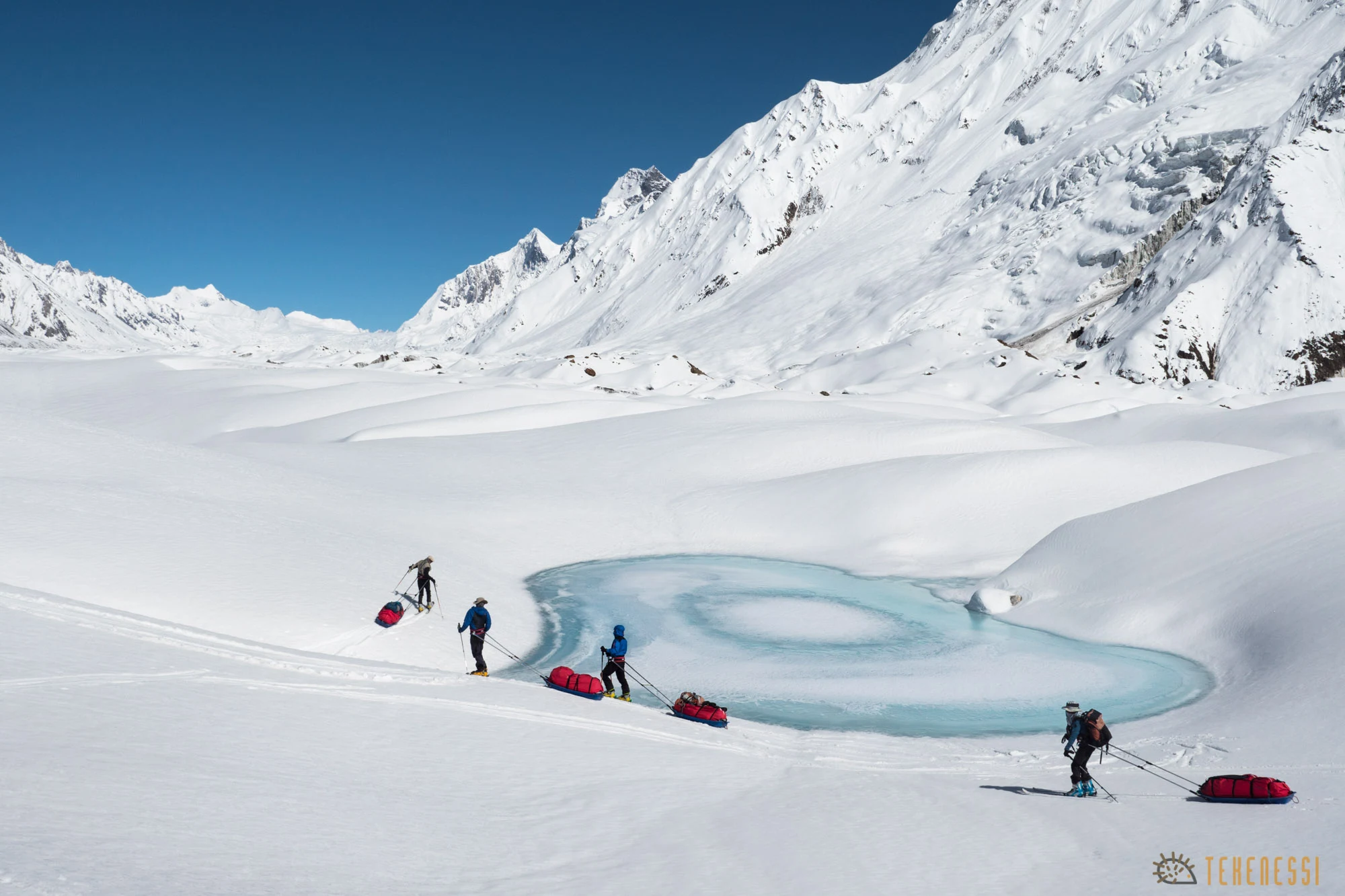
The Biafo–Hispar landscape and Snow Lake are central to the mountain journeys people associate with this area. The selected photographs introduce that landscape; they do not demonstrate a measured climate change.
Where snow persists over many years, layers can compact into glacier ice. Gravity moves that ice through the landscape. The upper glacier gains snow, while lower areas may lose ice through melt and other processes.
Rock debris, seasonal snow and temporary water can change a glacier’s appearance. Comparing two photographs without matching dates, viewpoints and conditions can create a misleading impression.
Questions about ice thickness, flow, mass change and water each need suitable measurements. A glacier advancing, retreating or surging describes different processes; these terms should not be used interchangeably.
The Karakoram has not always followed the same glacier patterns as other mountain regions. ICIMOD’s 2023 assessment reports a shift towards regional ice loss in recent study periods, following the earlier pattern often called the Karakoram anomaly. Results depend on the period and glacier studied; regional findings should not be presented as a current measurement of Hispar itself. [source]
K2Climate aims to ask locally useful questions: How do residents describe seasonal snow? What changes do they notice in water availability? How do those experiences compare with weather records and glacier observations?
Snow and ice changes have consequences for mountain water systems and the people downstream. For Pakistan, the useful discussion connects mountain conditions with water planning, livelihoods and infrastructure, rather than predicting a single inevitable disaster. [source]
Glacial lake outburst floods are one recognised regional hazard. A lake’s presence alone does not establish its danger; this website does not identify a specific Hispar lake as hazardous. [source]
Scientific work on Hispar already exists. Our contribution is to seek more sustained exchange between researchers and residents: accessible explanations, locally relevant questions and opportunities for community participation.
Discuss glacier observations, seasonal water, environmental knowledge, livelihoods or science communication. We offer a starting conversation, not guaranteed research access.
Share experiences voluntarily, decide whether to be named or recorded, and review how your words are translated and presented.
Mountain photographs can make a route look simple. They cannot show current access, conditions, permission requirements or emergency support. Before travelling, confirm your exact itinerary with the relevant authorities and appropriately licensed providers.
For permits, possible NOCs, guide requirements and current restrictions, use the Directorate of Tourist Services. Requirements can depend on route, activity and nationality; K2Climate does not issue permits, provide live safety clearance or guarantee guiding services.
Ask before photographing people, respect private and culturally sensitive places, minimise waste and agree guide costs and arrangements in advance.
Links provide background, not endorsements or institutional partnerships.
Page prepared 21 October 2026. Scientific findings refer to the dates and study areas of the cited work; this page is not a live hazard assessment. Suggest a correction.
PART 1 OF 3 · GEOGRAPHY, MOUNTAINS & LAKES
Gilgit-Baltistan is a high-mountain region in northern Pakistan. Its landscapes span the Karakoram, Himalayan and Hindu Kush systems. That broad description helps explain its extraordinary variety, but it should not flatten the region into a single climate, language or way of life. Valleys differ in altitude, access, landscape and community history. [1]
The Karakoram is central to K2Climate’s connection with Hispar and its glacier interests. The Himalayan landscape includes Nanga Parbat, while the Hindu Kush is part of the wider geography of northern mountain valleys. A mountain-system name helps orient a reader; it does not replace knowing the particular valley where someone lives or where a research question arises.
Regional tourism resources highlight K2 and Nanga Parbat alongside valleys, forts, meadows and lakes. A useful introduction can celebrate these places while giving equal attention to residents. Mountain labour, education, language, farming and everyday mobility are part of the same regional story as a famous summit. The official destination guides below provide a starting point for exploring individual places.
Attabad Lake in Hunza formed after a landslide in January 2010 blocked the river. Its striking appearance should be understood alongside the disruption associated with its formation. It is a clear example of why a beautiful lake should not automatically be described as a glacier-melt lake, or its origin attributed to climate change without the relevant evidence. [2]
Other places to explore through official regional guides include Phandar, Naltar, Kachura, Sadpara and Rama. These names introduce a range of settings rather than a single lake type. Before writing a caption or explaining a hazard, identify the correct place and use information specific to that lake. A broad regional photograph cannot establish the condition of an individual site.
Hispar belongs within Nagar’s landscape and community life. K2Climate uses that personal connection as a starting point, while recognising that other valleys have their own experience and knowledge. Contributions from the wider region should name their place and perspective, rather than present one account as the voice of all Gilgit-Baltistan.
PART 2 OF 3 · CLIMATE, WATER & LIVELIHOODS
Snow, ice, rivers and people are connected through water and through the timing of seasons. For a household or farmer, a change can matter because of when water becomes available, when work must be done or whether an access route remains usable. A scientific assessment and a community account can illuminate different aspects of that connection.
Snow can store winter precipitation and release it through melting. Glaciers also contribute meltwater, while rainfall and other stores contribute to river systems. The share from each source varies by place and season. ICIMOD’s work on the Indus brings these processes into the discussion of water resources and hazards. It is more useful to ask where and when a change matters than to assume a single percentage applies everywhere. [3]
For Pakistan, the wider importance lies in planning for water variability and connected systems. Changes in headwater conditions can have implications downstream, but the pathway includes river processes, infrastructure, management and human demand. We avoid attributing a country-wide outcome to one glacier or treating a projection as a guaranteed event.
Consider a possible chain: a mountain event affects a route; travel becomes difficult; transport and access to services are disrupted; households and businesses must adapt. Alternatively, an irrigation problem can require repairs and changes to farm work. These are explanatory examples of how exposure and access matter, not reports of a new event in a named valley.
Tourism-related work can also be sensitive to access and conditions. Guides, porters, accommodation providers and other local businesses need clear communication and fair arrangements. Responsible visitors should avoid adding pressure during disruption, follow official guidance and recognise that a postponed journey can be less important than residents’ immediate needs.
An elder may describe changes in seasonal routines or a place that has altered over decades. A farmer may explain how water availability affects work. A young person may describe what climate learning is available locally. These are different kinds of testimony. Recording their context, time period and uncertainty helps a wider audience understand what the account can and cannot establish.
The most useful collaboration does not require local experience to imitate a scientific paper. It asks clear questions, respects the speaker and invites comparison where suitable observations exist. Nor should a scientific result be translated into an alarming headline that goes beyond the study. The Hispar climate section explains why the Karakoram’s glacier behaviour needs particular care.
PART 3 OF 3 · EDUCATION, HEALTH, CULTURE & OPPORTUNITY
Education is a central part of how young people gain choices and contribute to their communities. In remote mountain settings, access should be understood through the actual school, journey, household circumstances and available support rather than a general assumption about the whole region. Girls, boys and learners in different valleys can face different opportunities and barriers.
AKDN documents education programmes in Gilgit-Baltistan and Chitral, including work on school improvement and community participation. Those programmes demonstrate existing effort; they do not establish that every community has the same provision. K2Climate’s contribution focuses on accessible climate learning and connections with people willing to share skills. [4]
Clear explanations in familiar language can make a complex topic more approachable. Climate vocabulary, subtitles and examples from everyday life help a learner connect a broad idea with a question they recognise. Volunteers can support translation, editing and source checking, while educators can help make resources suitable for the intended age group. Abbas’s educational background and Habi Academy link appear in About Us.
Questions about water, travel, reliable services and environmental disruption also matter to wellbeing. A useful local account asks which service is needed, how people reach it and what happens if access is interrupted. It should not expose private medical information or turn a personal illness into an unverified climate claim.
UNICEF describes threats that climate change poses to children’s health, education and wellbeing across Pakistan. That gives a national context, not a district-level health assessment. Local health professionals and researchers can help explain the evidence relevant to a particular community. K2Climate welcomes discussion of education and communication projects; this website is not a clinical service.
Gilgit-Baltistan is linguistically and culturally diverse. Burushaski is a particular focus for K2Climate because of its connection with our community. Preserving a story includes respecting how its speaker wishes to be named, how it is translated and whether it should be shared at all. The Burushaski tab sets out our documentation interests and links to existing language resources.
Visitors can support respectful exchange by asking before recording, agreeing costs clearly, choosing appropriate local services and respecting community boundaries. A language, wedding or tradition is not simply entertainment for a visitor’s camera. Where community members want to share, listening carefully and retaining the original context can be more valuable than seeking a dramatic clip.
Students, scientists, linguists, NGOs and educators can begin with a clear explanation of their idea, what participation involves and what they hope to produce. Useful outcomes might include accessible findings, learning materials, skills exchange or a locally reviewed record. The form should be discussed with participants rather than promised on their behalf.
Gilgit-Baltistan’s landscapes bring together the Karakoram, Himalayan and Hindu Kush mountain worlds. To understand the region, look beyond famous summits to the valleys, communities and connections between them.
K2Climate’s starting point is Hispar in Nagar. We do not speak for every community in Gilgit-Baltistan; we welcome contributions that identify their own place, language and perspective.
The region’s official tourism resources introduce places including K2, Nanga Parbat, Attabad Lake, Phandar and Naltar. These are distinct landscapes, not interchangeable backdrops. [source]
A focus for glacier research, high-mountain journeys and our interest in the Hispar landscape. Explore our dedicated Hispar page for the climate context.
Lakes differ in how they formed and how they behave. A scenic lake should not automatically be described as a glacial hazard; use site-specific evidence.
We plan to build this introduction through locally reviewed accounts, with place names and photographic locations checked before publication.
Our education and health focus asks practical questions: Can young people access climate learning in a language they understand? How do residents describe reaching schools and health services? What happens to daily life when travel or water access is disrupted?
UNICEF identifies climate threats to children’s health, education and wellbeing across Pakistan. That national context matters, but it is not a substitute for local evidence about Hispar or a particular district. [source]
We have not published district literacy rates, school counts or healthcare coverage here. Such comparisons need dated, geographically appropriate sources. We welcome educators and health researchers who can help explain reliable local evidence.
Responsible visits begin with consent, clear arrangements and respect for local work. Seek permission for photography, take waste away responsibly, use appropriately licensed services where required and avoid treating homes or traditions as attractions available on demand.
The official tourism department provides regional information, while the Directorate of Tourist Services provides regulation and provider information. Check current requirements for your route directly with them. [source]
We welcome researchers interested in water and snow, ecology, livelihoods, education, language and the relationship between people and environmental change. We particularly value work that explains its purpose clearly, agrees participation in advance and shares accessible findings back with communities.
Potential collaboration is an invitation to discuss an idea. It is not a confirmed partnership, funding offer, field facility or promise of permission.
Links provide background, not endorsements or institutional partnerships.
Page prepared 21 October 2026. Scientific findings refer to the dates and study areas of the cited work; this page is not a live hazard assessment. Suggest a correction.
Burushaski is described by linguists as a language isolate: it has no established genealogical relationship with another language family. This is a linguistic description, not a claim that its speakers live without connections to others. [source]
Regional varieties and individual ways of speaking matter. The University of North Texas collection documents materials from Hunza, Nagar, Yasin and Srinagar, demonstrating that substantial documentation work already exists. [source]
Words used for weather, snow, water, farming and place can help people describe their surroundings. We want to explore how elders explain environmental experiences in their own words, before translating them for a wider audience.
An interview can preserve a personal account without turning it into a universal claim about everyone in the valley or proof of a scientific trend.
Voluntary recordings about seasonal experiences, local histories and everyday relationships with mountain environments.
Locally reviewed words and explanations, retaining regional variety and avoiding invented translations.
A proposed climate education booklet, with translations reviewed by competent local speakers before release.
Subtitles, transcripts and clear translation credits, primarily shared through our social platforms.
Recordings and vocabulary entries are shared with attention to permission, attribution and local review. Explore our social platforms for available language and climate-learning content.
Restricted cultural knowledge and spiritual traditions are not material to publish without appropriate community permission. Participation is voluntary.
We welcome Burushaski speakers, elders, translators, linguists, teachers and students interested in respectful documentation. Help us develop consistent transcripts, review vocabulary or connect stories with existing research.
Discuss language documentation ↗
We encourage readers to explore the Burushaski Language Resource at UNT. It is an independent external resource, not a K2Climate partner.
Links provide background, not endorsements or institutional partnerships.
Page prepared 21 October 2026. Scientific findings refer to the dates and study areas of the cited work; this page is not a live hazard assessment. Suggest a correction.
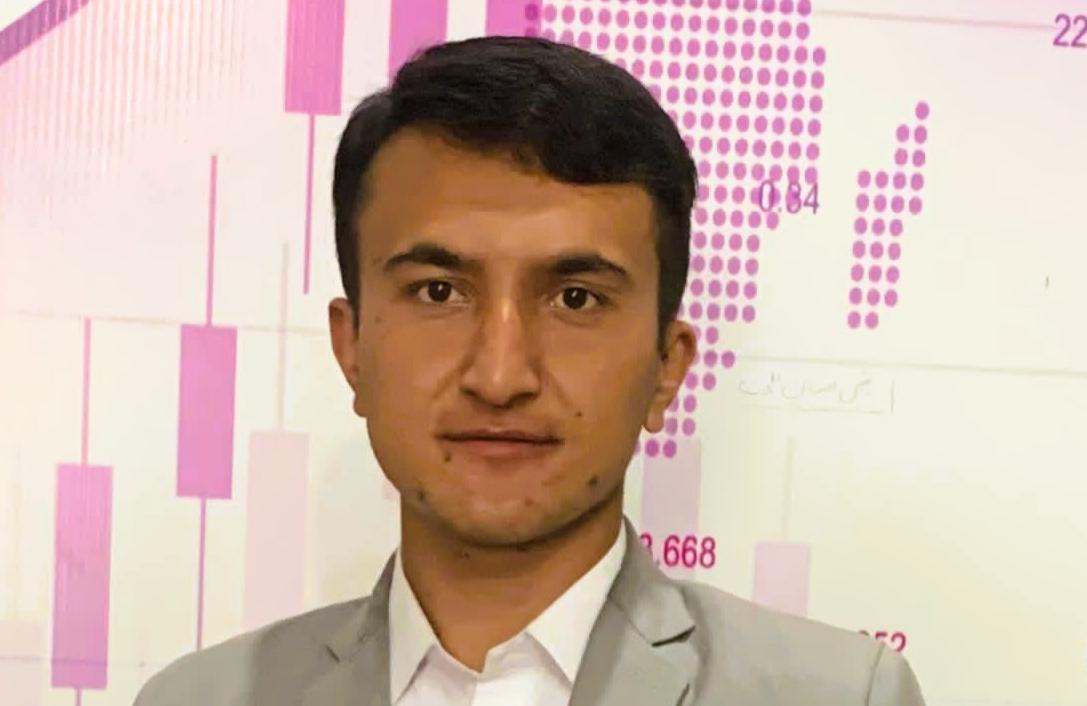
Also known as AR Habi on social media. Connect with Abbas on LinkedIn ↗
“I come from Hispar, a remote mountain village in Gilgit-Baltistan. I am the first person in my family to complete basic education.”
My educational background includes GCE A Levels at the World Academy of Development, Taxila, with studies in Business, IT and Economics.
Growing up in Hispar shaped my interest in climate science, sustainability and the future of mountain communities. I am also interested in research, accessible education and the documentation of Burushaski language and local knowledge.
I have completed climate-related courses and participated in international webinars online and national events in person. These experiences have encouraged me to keep learning and to connect community perspectives with wider conversations.
Course and event titles will be listed with their exact issuing organisations when supporting details are ready. Participation does not imply endorsement of K2Climate by those organisations.
I also founded Habi Academy. You can explore its published content on the Habi Academy YouTube channel ↗.
Habi Academy is included as part of my background. It is distinct from K2Climate’s environmental and community documentation work.
Hispar is a place of family, relationships and shared occasions. This photograph offers a personal connection to the community behind K2Climate.
K2Climate brings together a team of fewer than 20 volunteers across Pakistan, according to founder Abbas Ali, as of October 2026. Individual names, roles and photographs will be added only with their agreement.
We welcome people of all genders and backgrounds who can contribute to recording, translation, education, research summaries, editing or communication.
Our purpose is to help local voices take part in climate conversations while treating scientific evidence and cultural knowledge with care. Our main publishing channels are social media; the website provides context, contacts and links to our social-media content and ways to take part.
K2Climate brings local voices into climate conversations through education, community perspectives and opportunities to connect. Explore our social platforms for content and updates, or contact us to contribute.
Founder and team information on this page was supplied by Abbas Ali. Institutional links identify background and resources, not sponsorship.
For a direct conversation with Abbas Ali, email abbasalihabi@gmail.com. For the organising team, use kay2climate@gmail.com; this inbox does not necessarily reach Abbas personally.
K2Climate focuses on elders’ environmental experiences in Gilgit-Baltistan’s Karakoram communities, climate education and local knowledge. We want people to describe what they remember, what they notice and what questions they would like researchers to explore.
Articles, videos and reports will primarily be shared on our official platforms. This website will link individual pieces as they become available.
Our main publishing home is social media. Explore K2Climate’s official platforms for climate-awareness content, community perspectives, videos and updates. Share what you find useful and contact us with ideas or feedback.
Our focus: elders’ perspectives on seasons, water, livelihoods and local environmental experiences, recorded with consent.
Accessible climate learning in Burushaski and English, with attention to clear explanations, local language and scientific accuracy. Follow our platforms for resources and release updates.
Find climate-awareness content, learning opportunities and updates through our official social accounts.
Connect with us about research, language documentation, education and community collaboration.
Visit our social channels for the latest available videos, articles and updates. We welcome volunteers who can help record, translate, edit and share these perspectives responsibly.
Find our work, community perspectives and latest updates on our official channels.
We are open to NGO, research and education collaborations aligned with SDG 13: Climate Action. Explore collaboration opportunities →
We need volunteers who can help with consent-based interviews, Burushaski translation, subtitles, video editing, accessible writing and source checking. Local knowledge and careful listening matter as much as technical skills.
Help plan respectful interviews, explain consent and record locally appropriate context. Community relationships are essential.
Support Burushaski, English or Urdu transcripts, check meaning with speakers and make recordings accessible.
Contribute video editing, photography, writing, design or social-media support with clear credits.
Help summarise credible sources, check references and distinguish evidence from interpretation.
Work with educators on clear, age-appropriate climate explanations and learning activities.
Maintain accessible pages, check broken links and add approved stories and resources.
Tell us your skills, languages, location or time zone, approximate availability and whether you prefer remote or local participation. Enquire before assuming any role is available.
Roles, time commitments, supervision and any expenses should be discussed before you begin. This is an invitation to enquire, not an offer of employment, payment, travel, accommodation or field access.
Certificates may be available for eligible participation in designated activities, subject to criteria confirmed in advance. They are not promised for every contribution.
Volunteers should respect consent, cultural boundaries, participant privacy, source accuracy and agreed use of recordings. Do not collect or publish sensitive material on K2Climate’s behalf without an agreed process.
We are ready to discuss relevant opportunities with NGOs, universities, educators, climate professionals, linguists, environmental organisations and community groups. We welcome training, mentorship, workshops, research discussions and opportunities for our team to participate.
For researchers, introduce your institution or independent status, topic, proposed dates, intended outputs and approach to permissions and community benefit. For language work, describe the variety, materials and review process you hope to use.
Potential collaboration does not imply an existing partnership. Funding, ethics approval, safety arrangements, permits and any local logistics require separate confirmation.
We are not collecting donations through this website.
K2Climate is open to collaboration with NGOs, environmental organisations, universities, schools, research groups, cultural institutions and responsible community initiatives. We value opportunities that connect climate learning with local experience and give our team a meaningful role in the conversation.
Our interests bring together elders’ environmental accounts, Burushaski language and local knowledge, climate communication and youth participation. We welcome invitations to relevant training, workshops, webinars, events, learning exchanges and community-focused projects.
OUR SUSTAINABILITY FOCUS
K2Climate’s focus on climate education, awareness and community perspectives aligns with the United Nations Sustainable Development Goal 13: Climate Action.
Our closest connection is with Target 13.3, which focuses on education, awareness and the skills needed to understand and respond to climate change. Clear explanations, careful translation and opportunities for young people to learn are practical ways to support that aim.
Our interest in communicating climate-related hazards also relates to the resilience and preparedness themes of Target 13.1. We share educational context and encourage people to use qualified expertise and official information for local risk decisions.
Read SDG 13 and its targets on the United Nations website ↗
SDG alignment describes the aims of our work. K2Climate is an independent initiative; this does not imply UN affiliation, funding or endorsement.
Explore accessible talks, learning materials, translation, subtitles and opportunities for educators to review clear, age-appropriate explanations.
Discuss consent-based recording, editing and sharing of elders’ environmental experiences, keeping the speaker’s meaning and context intact.
Connect around glacier and water questions, livelihoods or science communication, with a clear process for permissions and sharing findings back.
Collaborate on transcripts, environmental vocabulary, local review and language learning with speakers and relevant specialists.
Invite volunteers to training, workshops, mentoring, youth forums or other relevant activities. Let us know the eligibility criteria, format and any costs or support.
Contribute writing, video editing, photography, design, source checking or digital assistance that helps us share useful content.
We bring a founder’s personal connection to Hispar, an interest in local perspectives and a volunteer team open to learning and contributing. Depending on the activity and agreement, contributions may include reviewing local context, supporting communication, translation or introductions.
At the start, we should agree the purpose, roles, schedule, participant consent, credits, intended outputs and any expenses. For fieldwork, the responsible parties must separately confirm permissions, ethics requirements, logistics and safety arrangements. A discussion becomes a collaboration only when the people involved have agreed what it entails.
A short message is enough to begin. Include your name and organisation, your idea or invitation, the intended audience, timing, whether it is online or in person, and the contribution you would like our team to make. If travel, attendance fees or other costs are involved, explain what support is available.
Organising team: kay2climate@gmail.com
Abbas Ali directly: abbasalihabi@gmail.com
Your feedback, shared content, introductions and encouragement also help our work reach people who can take part.
Founder of K2Climate · AR Habi on social media
abbasalihabi@gmail.comGeneral organisational and team enquiries. This inbox does not necessarily reach Abbas personally.
kay2climate@gmail.comYou can use the email link, open Gmail in your browser or prepare a message below. The website does not submit or store your enquiry.
Hispar Valley · Nagar District · Gilgit-Baltistan · Pakistan
For corrections, include the page link, wording in question and a suggested source. For recording or image concerns, include the public link and the change you are requesting. Avoid emailing identity documents unless a suitable process has been agreed.
For visits, availability and arrangements must be confirmed before travel. K2Climate is not an emergency service or live hazard-information provider.
| Label | What it means |
|---|---|
| Community observation | A person’s account or memory, with context and consent. It is not automatically a measured trend. |
| Scientific evidence | A finding attributed to a named source, study area and period, with uncertainty retained. |
| Upcoming activities | An upcoming activity or resource, labelled separately from published material. |
We welcome respectful criticism and do not claim that every environmental change has a single cause. Sources are linked on the relevant learning pages.
Our recording approach includes explaining publication, agreeing attribution, respecting anonymity, reviewing translations and offering a correction or removal contact. Sensitive or restricted cultural knowledge should not be published without appropriate permission.
Children should not be interviewed or identified without an appropriate safeguarding approach, necessary parent or guardian consent and the child’s agreement. We will not publish children’s identifying details merely to demonstrate activity.
This version does not include analytics, advertising, newsletter tracking or an enquiry database. The contact helper runs in your browser; it only prepares a draft or copies your message when you choose a button. It does not send the form fields to K2Climate.
Opening email or Gmail passes the prepared text to your chosen email service. When you send an email, K2Climate receives the information you choose to include. Send only what is necessary; contact us for questions about an enquiry or published recording.
Two landscape images load from an external Google-hosted image service using links selected by the founder. That service receives a request from your browser, including your IP address. Other external platforms receive requests when you open their links. Their own policies apply. The hosting provider may process technical access information to deliver the site.
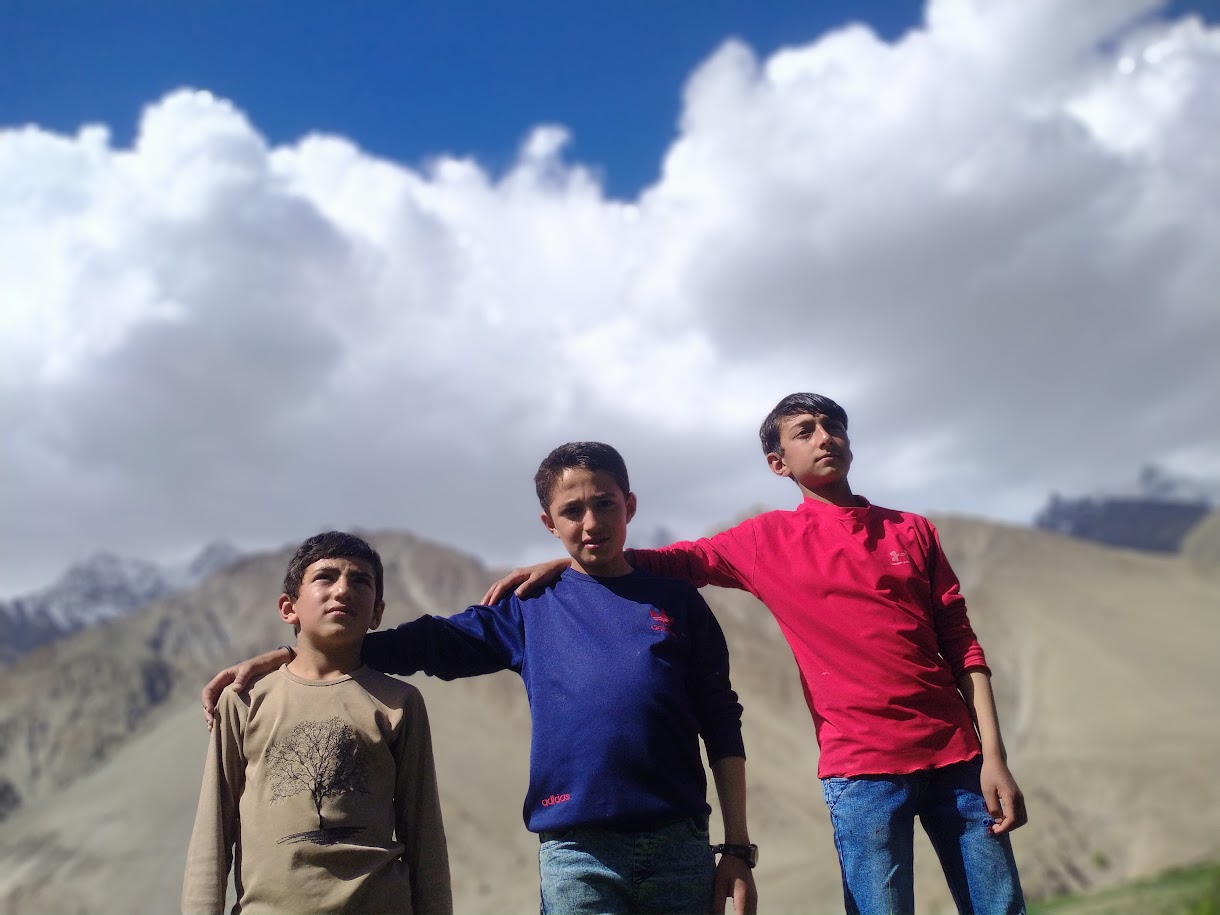
The K2Climate logo, founder portrait and wedding photograph were supplied by Abbas Ali. The photograph of Burusho community members is credited to Abbas Ali. The wedding photographer was not specified. Captions and personal context were supplied by Abbas; no unprovided dates or participant names have been added. The two online landscape image links were selected and supplied for the website; their original photographer and reuse licence have not yet been confirmed. They are not described as photographs taken by K2Climate.
Original watermarks on supplied backup photographs remain intact. Please contact us with attribution or rights corrections. Founder-supplied images and online links are not proof of ownership or permission.
The founder’s biography, education and volunteer-team description come from information supplied by Abbas Ali. Exact course titles and certificates are not yet published. External research, educational and government links are references, not claimed partnerships or endorsements.
If a statement, translation, caption or link needs correction, send the page address and suggested change. We aim to review concerns and correct material on channels we control. Copies shared elsewhere may remain outside our control.
Content prepared 21 October 2026. Page dates describe editorial preparation, not a scientific field survey or current travel clearance.